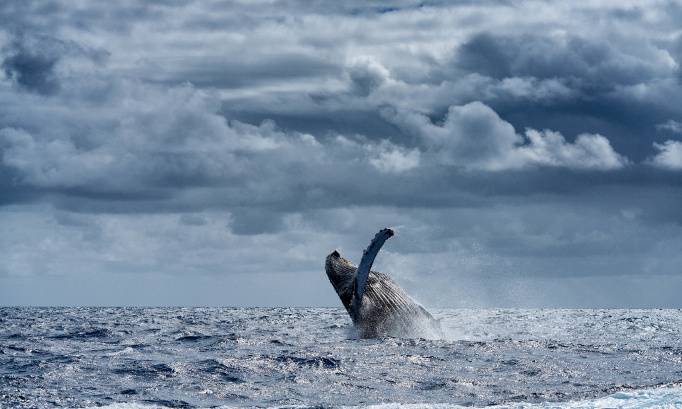
In September 2023, the United Nations signed the High Seas Treaty in one of the largest conservation victories to date. In order for it to enter into force, however, 60 countries need to ratify it by June 2025. As of July 2024, only 8 countries have ratified and 91 have signed. Once ratified, we will be able to implement marine protected areas in international waters. This would be a giant leap towards achieving the global target of protecting 30% of the world’s oceans by 2030, termed as “30x30”.
We recognize that ratifying the High Seas Treaty before June 2025 is a critically important first step. Once ratified, we will have both the data and legal ability to recognize and protect marine wilderness globally. We must prepare policymakers with informed conservation priorities in order to act on marine wilderness protection as soon as possible after ratification of the High Seas Treaty. This would not take away priority from already-threatened ecosystems. Instead, we recommend a two-pronged approach to incorporate marine wilderness protection into conservation strategies as a preventative measure. This approach is crucial not only for preserving biodiversity but also for maintaining large-scale ecological and evolutionary processes. Protecting the remaining 13.2% of marine wilderness would require minimal resources, serve as a preventive measure against human impacts, help to avert irreversible changes in these ecosystems, and advance progress towards reaching 30x30.
We are asking experts in the field of ocean conservation to add their name to this declaration so that it has the weight of the entire conservation community as we rally countries to ratify the treaty.
Vous êtes sûr ? Votre mobilisation est importante pour que les pétitions atteignent la victoire !
Sachez que vous pouvez vous désinscrire dès que vous le souhaitez.